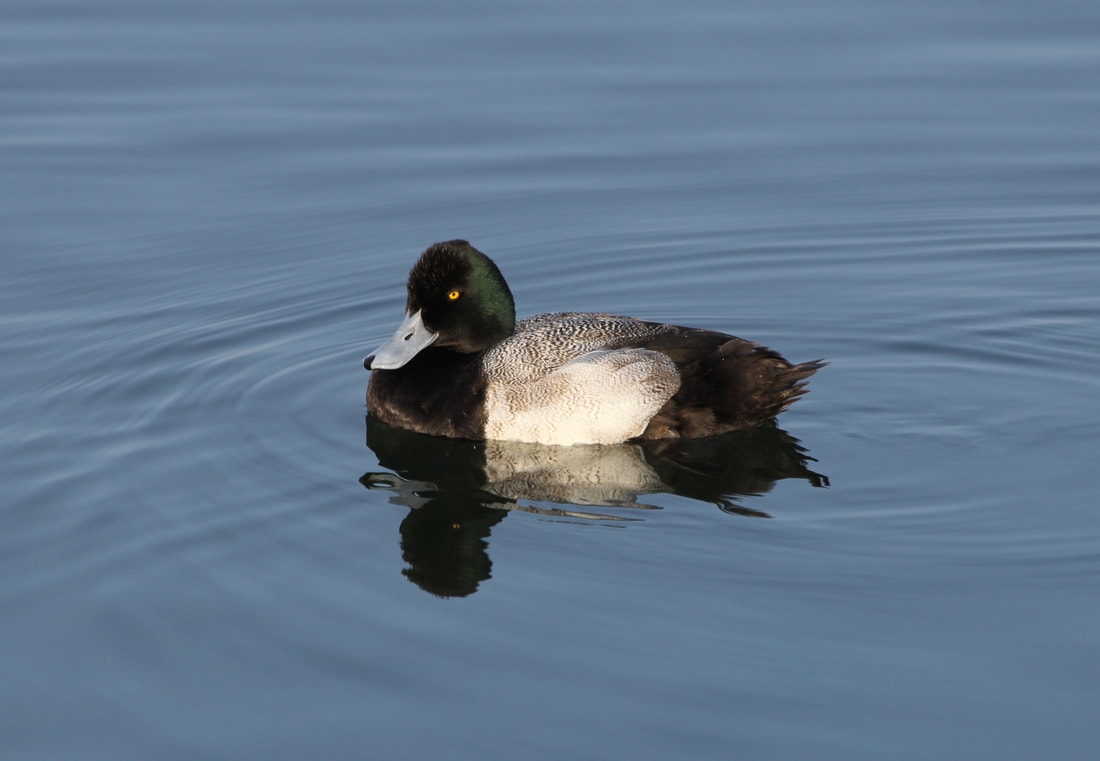
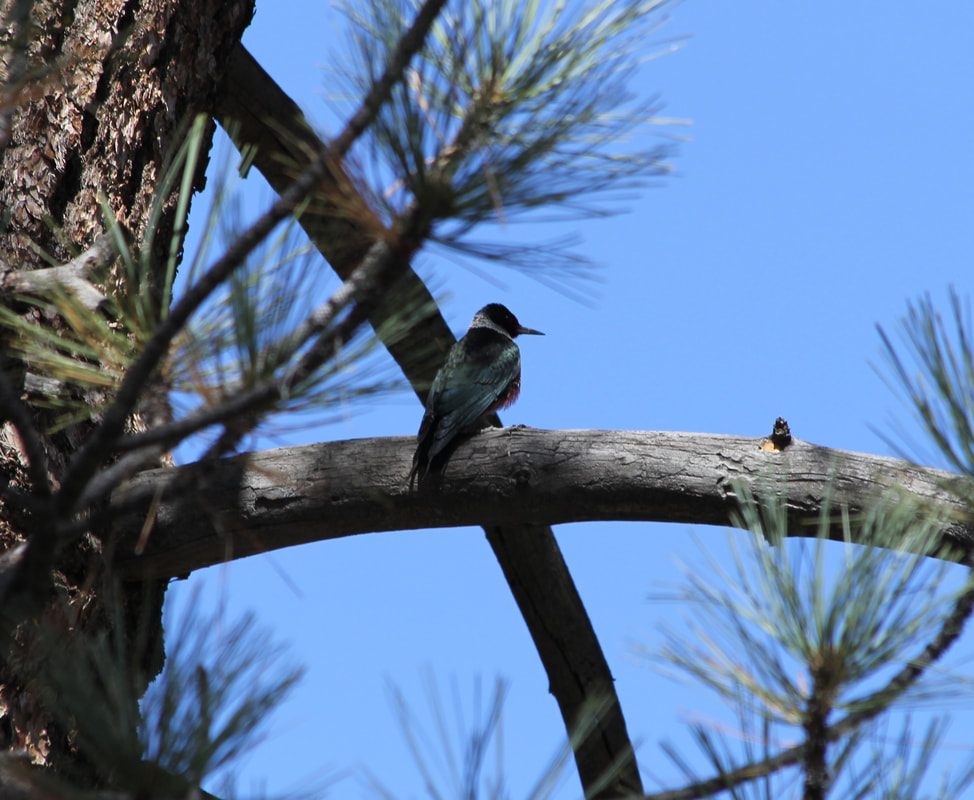
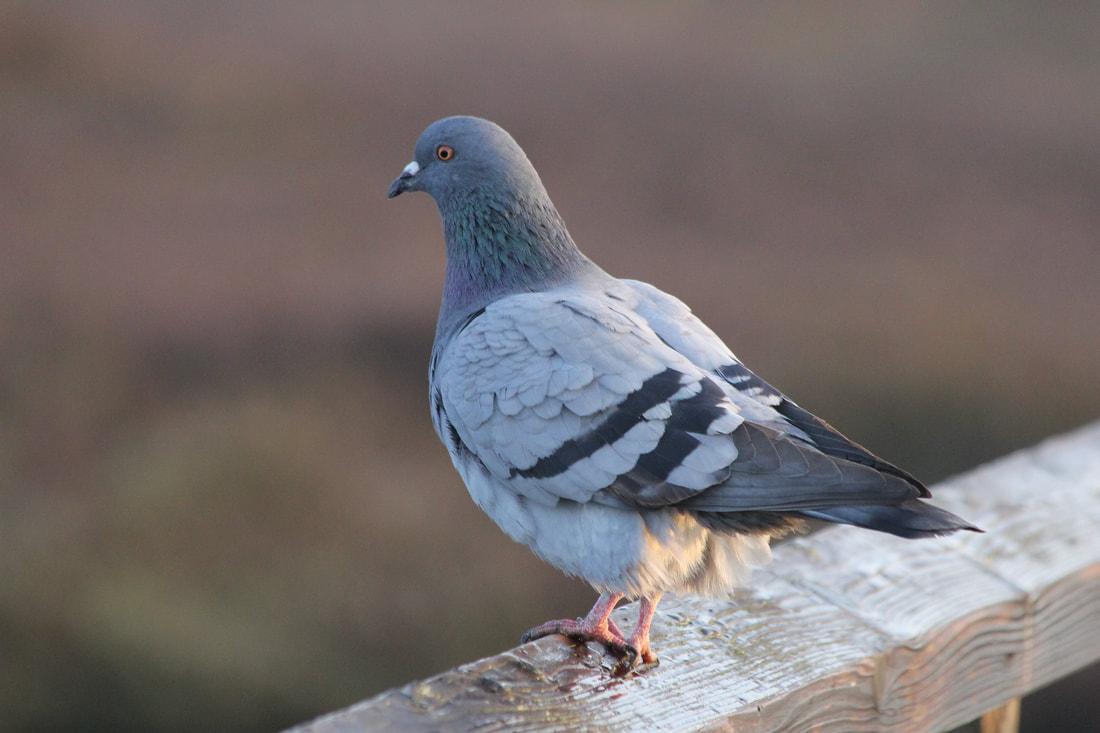
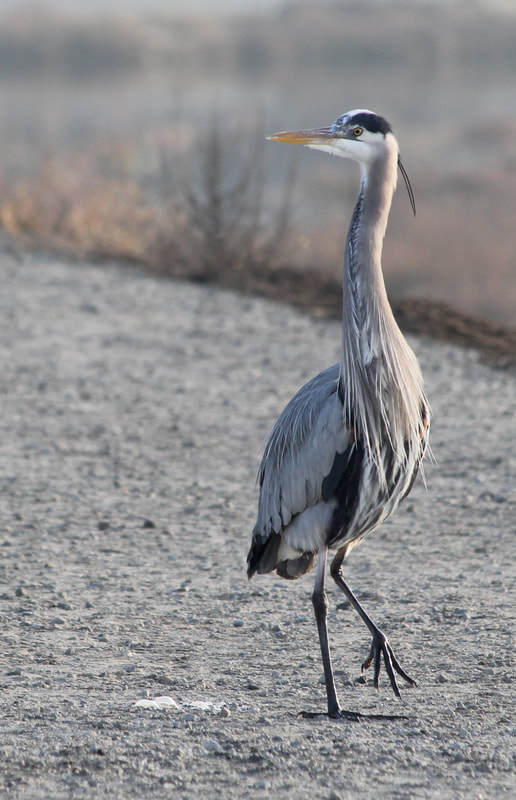
At long last, I’ve returned to the blogosphere. I’ve begun poring over the hundreds of posts from other bloggers that piled up in my RSS feed, and now here I sit, trying to peck one out myself, while my cat alternates between walking across my keyboard and head-butting me. Of course, he’s just a convenient scapegoat – the real thing that’s hard about writing is… writing.
It’s been over two weeks since I posted. Was I in some remote jungle in New Guinea where there’s no internet service? Was I sequestered as part of a jury in a celebrity murder trial? Was I in a coma?
You’ll never know. You should learn to live with uncertainty.
The point is, I’m back. When last we met, I was blathering about a bunch of travel plans I have for this spring. Well, some of em got done already. I was in the Dallas area for a little over a week, and did a bunch of birding there. I have two key takeaways about Dallas birding:
1. In Dallas proper, the birding-quality-to-traffic-frustration ratio (a measure that I may have invented, henceforth BQTF) is mediocre. Here in L.A., we have plenty of traffic, but there are also shit-tons of birds. When I get off work, I hop in my car and twenty minutes later I’m seeing cool stuff. In Dallas? Meh. Granted, I don’t know Dallas as well. Well, go ahead and prove me wrong, Dallas.
2. If you have time to go like an hour and change outside of Dallas, there's really cool birding. I used the weekend to make two such trips. First I went southwest to Dinosaur Valley State Park, in search of my lifer Golden-cheeked Warbler – which, after much warblerless hiking, I did in fact find. I also found some more unexpected stuff, like a Philadelphia Vireo and a rare-for-there Townsend’s Warbler. Plus, it was a gorgeous place. Then I went north to an area just shy of the Oklahoma border which has Harris’s Sparrows and lots of other cool shit.
Each of those weekend trips is worthy of a post on its own, but it’s too late for all that fuss so I’ll just give you a few photographic highlights. It’s probably better for everybody.
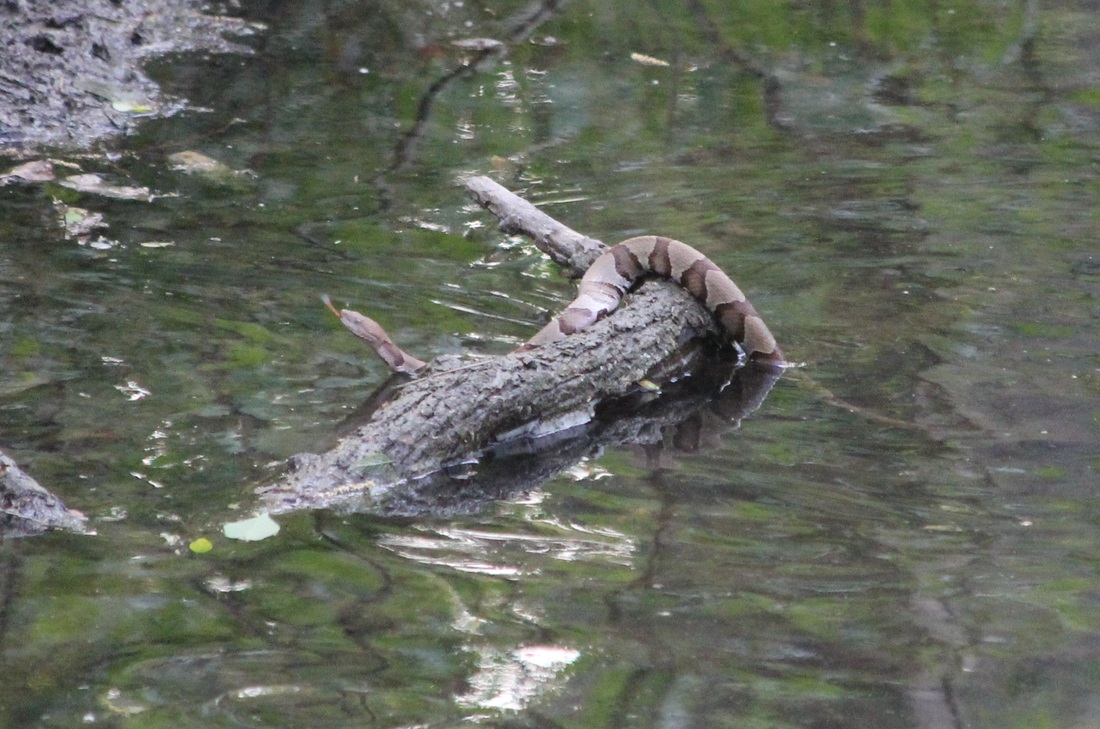
First a non-bird, but one of my coolest sightings in recent memory:
Copperhead!
Saw that little beaut at White Rock Lake (thanks for the tip Laurence), when it swam across a creek. Dope.
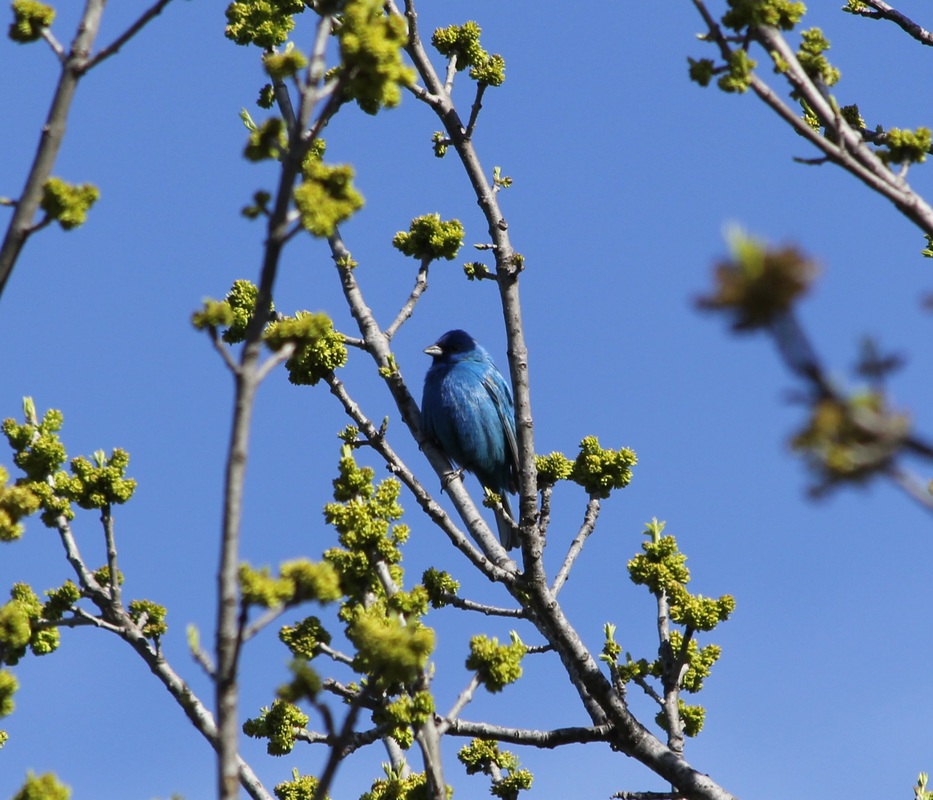
Indigo Bunting
Not a great pic of him, but gives a sense of the spring-springing that was going on in D-Town.
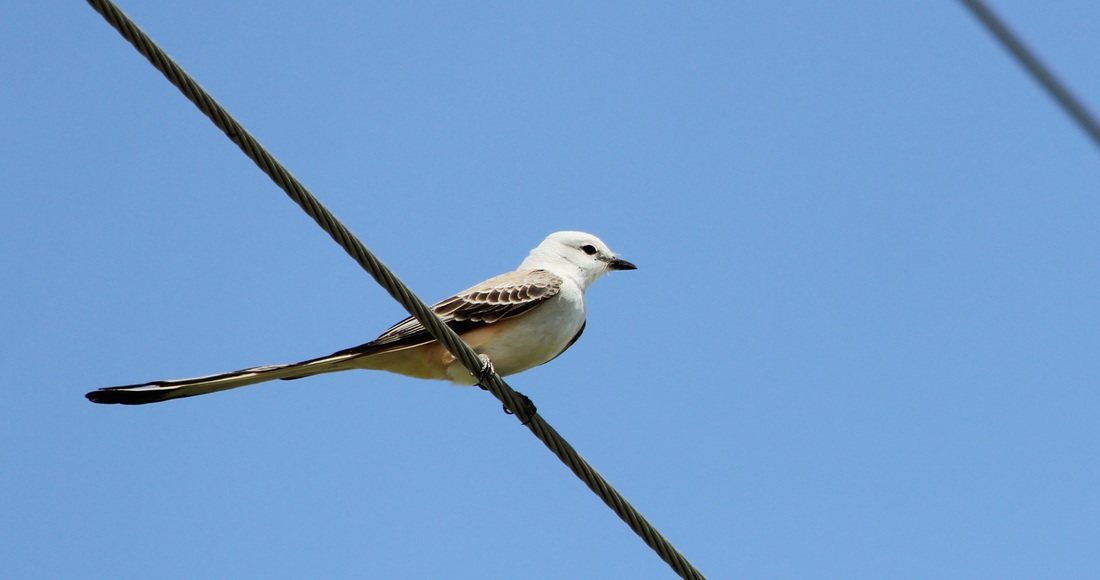
Scissor-tailed Flycatcher
Seriously does not do the bird justice, but I had to include one of these. I love these guys and they're all over the place out there.
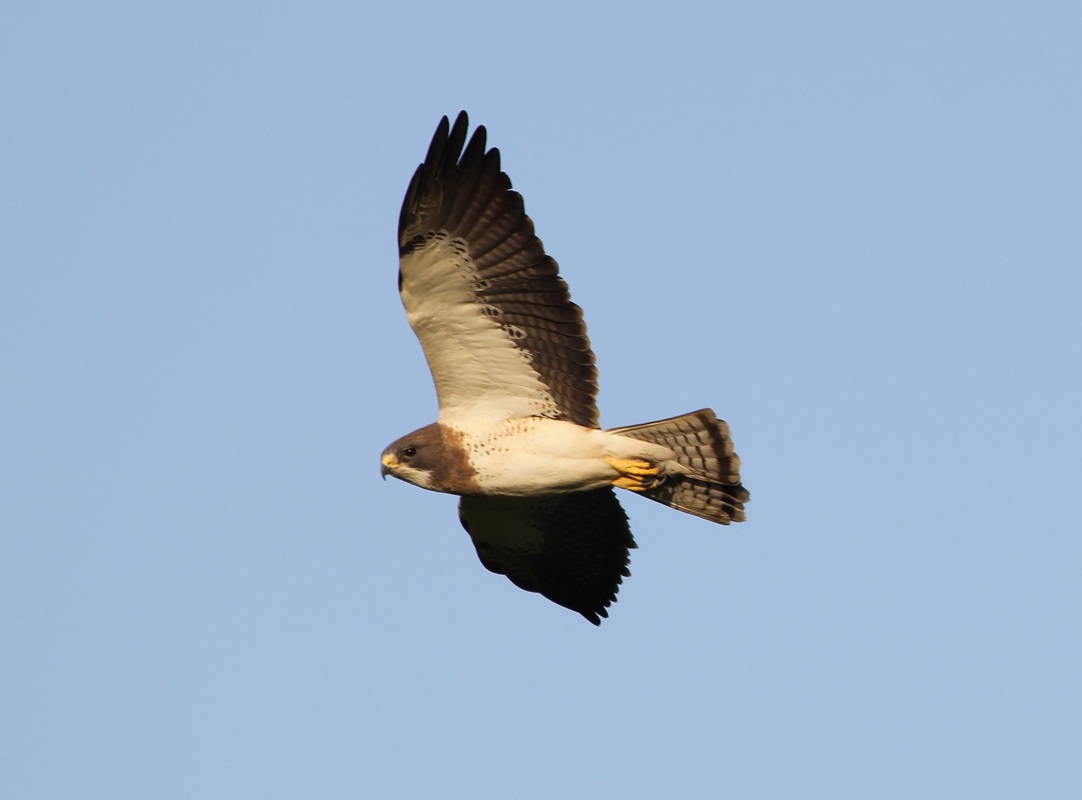
Dear Swainson's Hawk,
You can fly, but you can't hide from my bird-crusher.
Warm regards, BFHIn the end, I returned from Dallas satisfied, and frankly sort of birded out. The old familiar haunts were a little less exciting after that. Fortunately, I recently got a bike and have begun exploring the path that runs along the L.A. River, which puts me in position for some pretty decent incidental birding. That’s what I did today. Although I’ve written disparagingly of the L.A. River in the past, I actually sort of love it. It’s been thoroughly transformed by human activity – deliberately so – and in many places looks downright depressing, but still there’s remarkable vegetation and bird life in some spots. My interest in it grew recently when I read Blake Gumprecht’s book, The Los Angeles River: Its Life, Death, and Possible Rebirth. Did you know that, in the mid-1800s, largely thanks to the river’s largesse, L.A. was known as a wine- producing region? The “City of Vines,” they called it. And as recently as the 1930s, the river was subject to frequent, catastrophic flooding. Hard to imagine for those of us who know it as a trickle in a giant concrete bed. Anyway, today the sun and the birds were out in force:
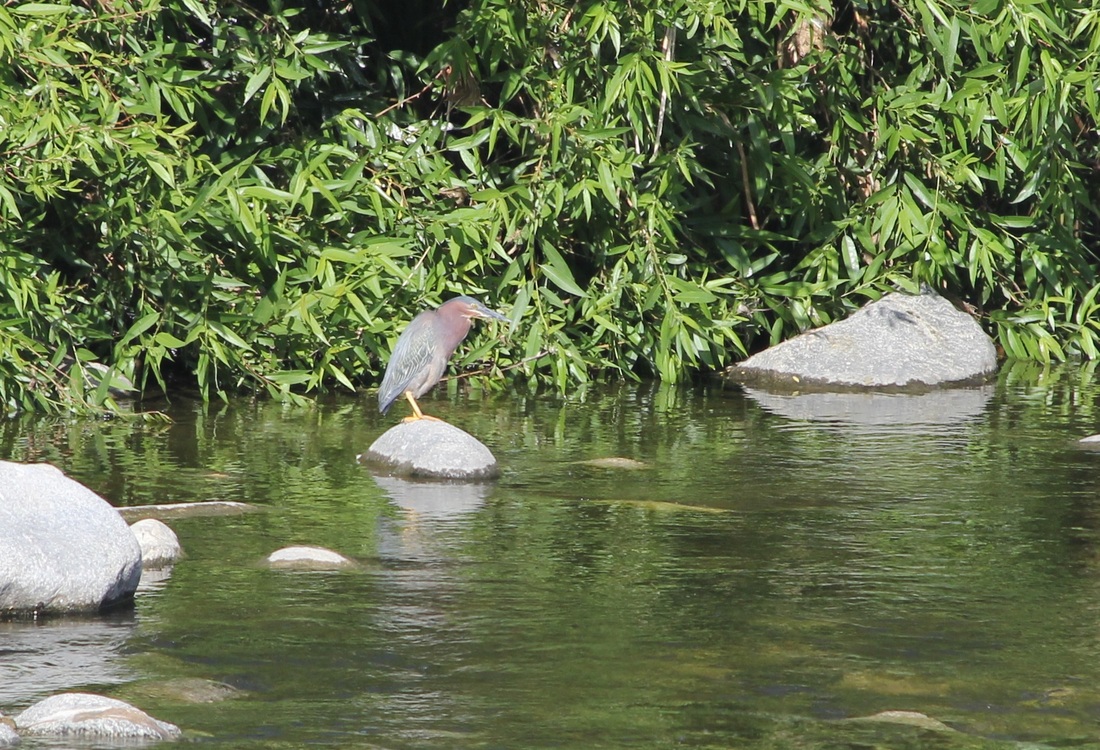
Green Heron
Not exactly the world's rarest bird, but pretty cool for such an urban setting.
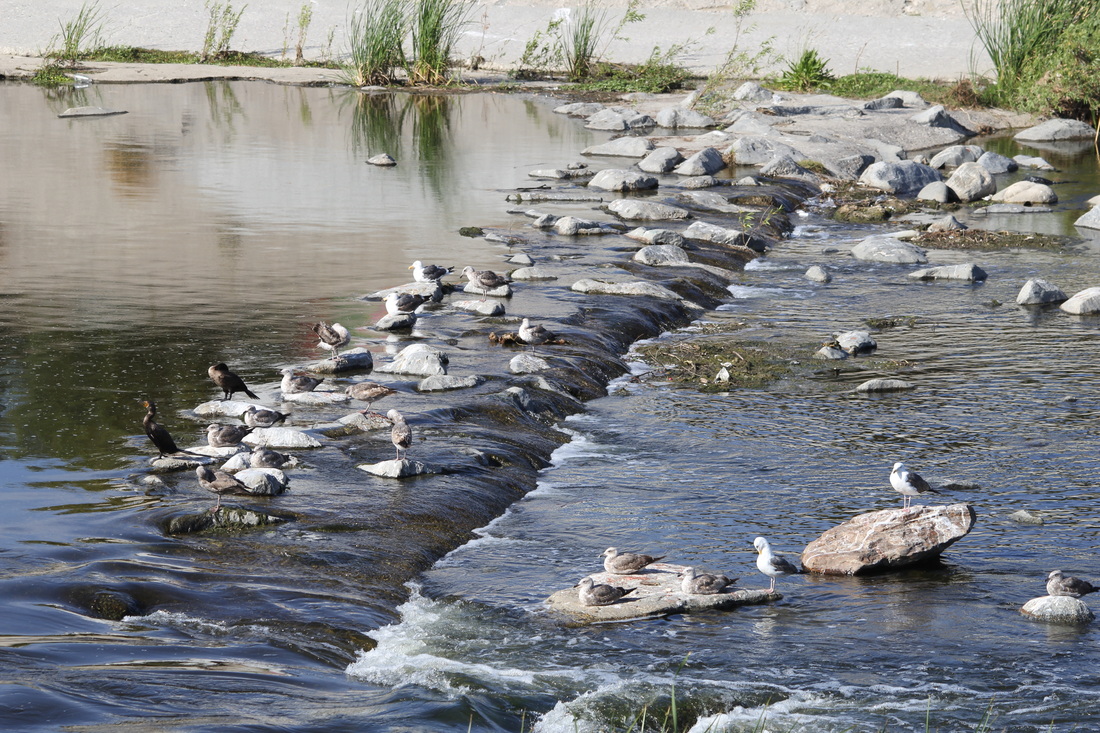
Double-crested Cormorants, Western Gulls
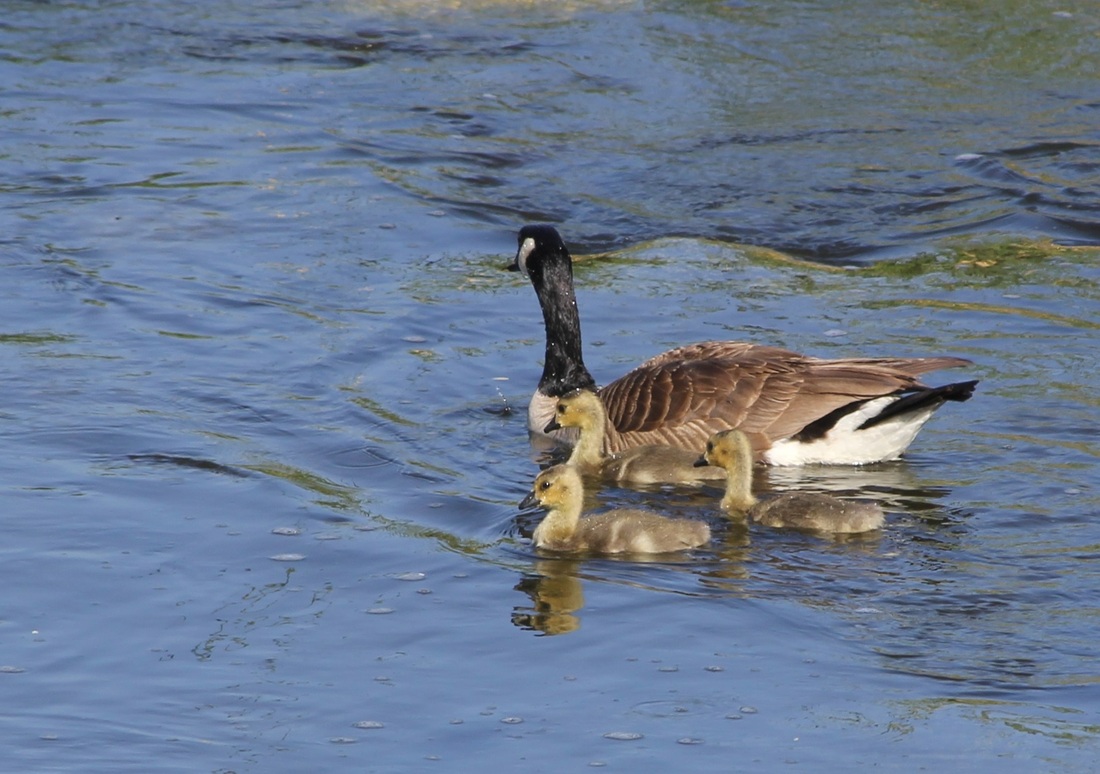
Canada Goose with goslings. Come on! CUTE.
By the way, the place where I got my bike is great. The owner is a very interesting dude and seems to have a budding interest in birds to boot. He even name-checked me on his pithy blog. Everybody there is really helpful. If you’re in L.A., even if you don’t need a bike, you should drop by just to shoot the shit with these guys. Anyway, this is how I’m spending the lull in my Spring Birdstravaganza. Not bad. Friday night I head off to High Island, Texas for what should be some sick migration birding. Until then, I bide my time, quiet, calm, but intent… marshaling all my resources in preparation for the frenzy to come. U.S.A., you're about to get birded. HARD.
Sometimes things are great. - Bomb the Music Industry! “Syke! Life Is Awesome!” (If you have headphones on or want to piss off everyone around you, check it out here!) For the last few months I’ve been A-O-K just chilling in SoCal, as it seemed the only place in the U.S. suitable for human habitation. Word on the street is, spring is now springing in other places, and I intend to find out for myself. Over the next couple months, I’ll ride planes, trains and automobiles in pursuit of vocation, avocation, vacation and birdcation. No, most of my plans were not made primarily for birding purposes, but they happen to take me to some very good spots at some very good times. Because sometimes, things are great. Check it: TONIGHT: Dallas, TX LATE APRIL: High Island, TX. Two days of balls-to-the-wall, no-holds-barred, don’t-eat-don’t-sleep-don’t-do-anything-but-bird birding. LATER APRIL: Dallas again. EARLY MAY: New York, NY. Manhattan, the island that has everything, has even more than everything in May. It has warblers. Hell yes. MID-TO-LATE MAY: ??? Mrs. BFH and I are mulling vacation options. No doubt we’ll be taking in our share of monuments and gift shops and the like, but rest assured: there will be birds. All in all, this could turn out to be my birdiest year yet – maybe even by Memorial Day. But in my excitement, I’m getting ahead of myself. First things first: Where does one bird in Dallas in April???
Previously seen on Cleaning Up in SoSoCal:
California Gnatcatcher. NO Pacific Golden-Plover. Wandering Tattler. Clapper Rail, barely. Footlong turkey on honey oat. Bell’s Vireo.
SATURDAY (CONTINUED)
EXTERIOR. A FREEWAY THROUGH A VAST, ROCKY DESERT. MID AFTERNOON.
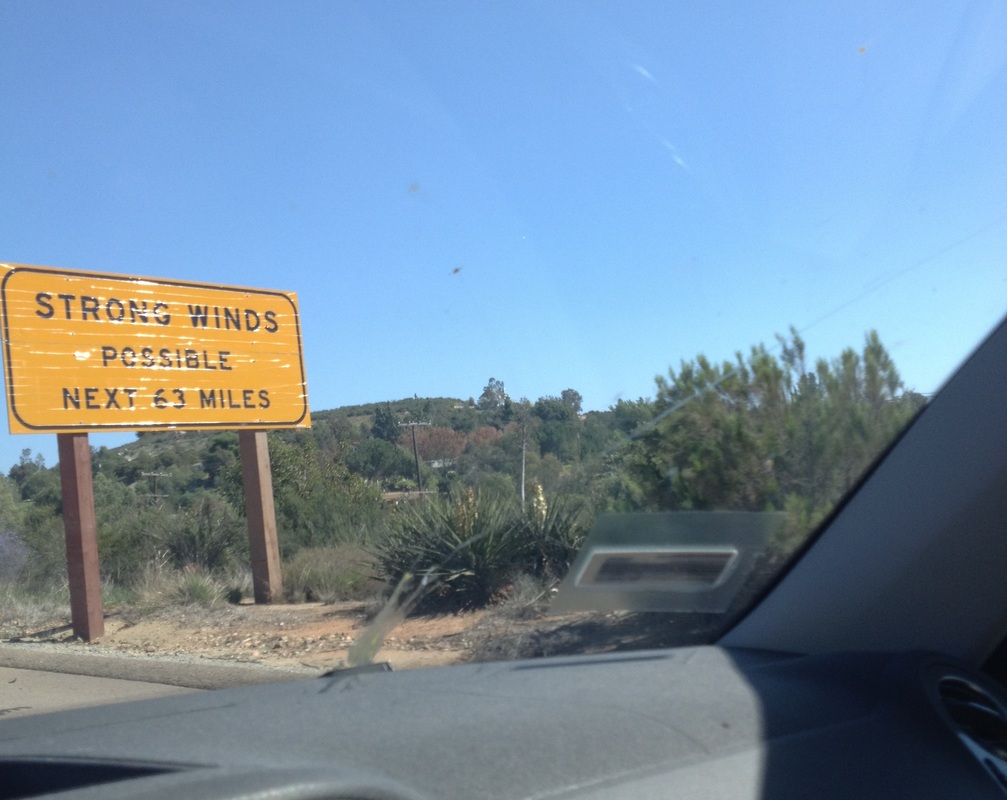
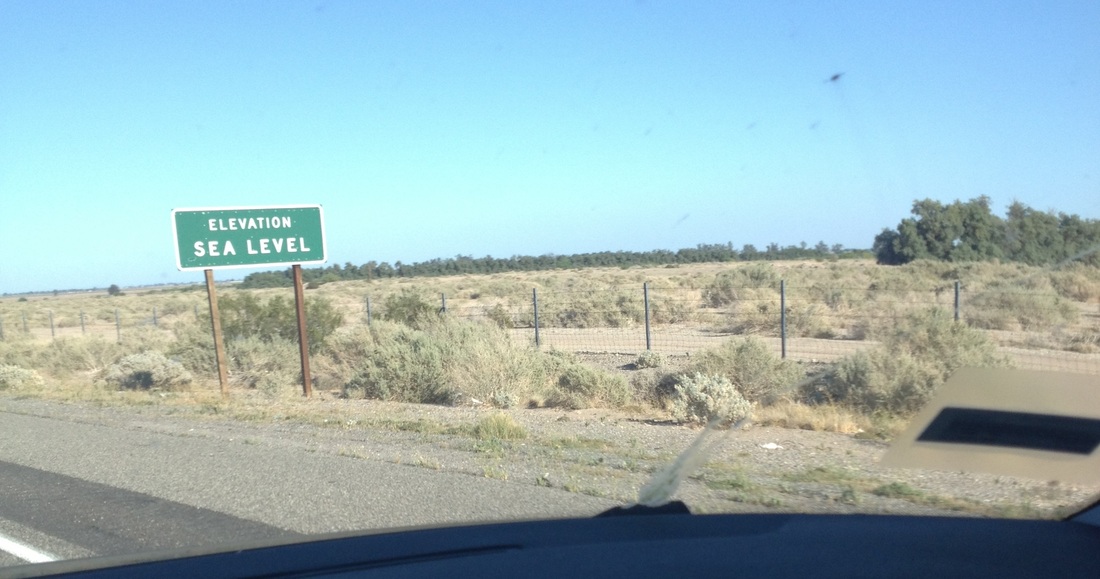
After my departure from the Bell’s Vireo spot, it’s a brief trip through the San Diego suburbs and then a long haul through nothingness. It’s a good opportunity to ponder one’s place in the universe. And to snap some iPhone pics of the stuff one is passing.
Always nice to know you have 63 miles of anything to look forward to. Stop the presses! By and by, I arrive. 3:50 pm. Jacumba, CA. Targets: Tricolored Blackbird, Harris’s Hawk. Yes, my next location is an entire town. Or rather, a small settlement, an outpost on the Mexican border. Jacumba, or “J-Town” as the locals call it, is small enough that the online bird reports don’t refer to specific locations within it; it’s just: Jacumba. In fact, it’s small enough to have an adorable community Facebook page. (My favorite post from the J-Town account: “ The lake is filling up very slowly.”) So I figure I’ll just show up and somehow know what to do. For a hot minute, it feels like I may have made a mistake. I see doves, starlings… a few people milling around… and the big creepy fence that separates Us from Them: It is *weird*. (Click to enlarge.) But I just drive around slowly, hoping not to attract the attention of the locals, all of whom probably have rooms full of guns. Pretty soon a flock of blackbirds flies over the car and lands nearby. I stop in the middle of an intersection to check them out, and sure enough they’re Tricolored Blackbirds, giving their awkward rasping call. Cha-ching! Feeling the unwelcome gaze of a Jacumbian locked onto my car, I mosey along.
I still need that Harris’s Hawk though. This is a beautiful bird, unique in many ways among hawks, and one I’ve wanted to see for a very long time. It’s my last target of the day, but since I have no idea how to make it materialize in front of me, I think about taking off so I can fit in another stop before nightfall. Finally, as I’m about to head for the exits – you guessed it – the hawk shows up. I only get brief looks as it flies off, but I am happy. God bless you, J-Town.
At 4:45 I roll out, feeling my oats. I speed east and then north, past the town where I’ll be spending the night, to my Extra Bonus Birding Location of the Day.
5:40 pm. The Salton Sea.
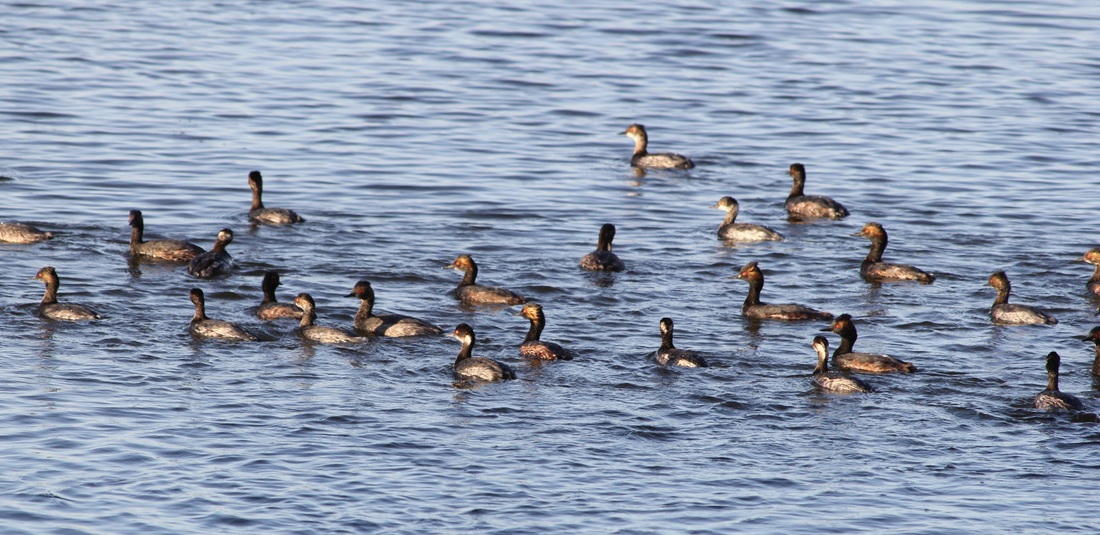
It’s a weird wild place, with more steam-spewing industrial-type buildings than humans. I have faint hopes of stumbling on a Yellow-footed Gull here, which I soon abandon; I probably wouldn’t recognize the damn thing anyway. But the birding is good. Eared Grebes are everywhere.
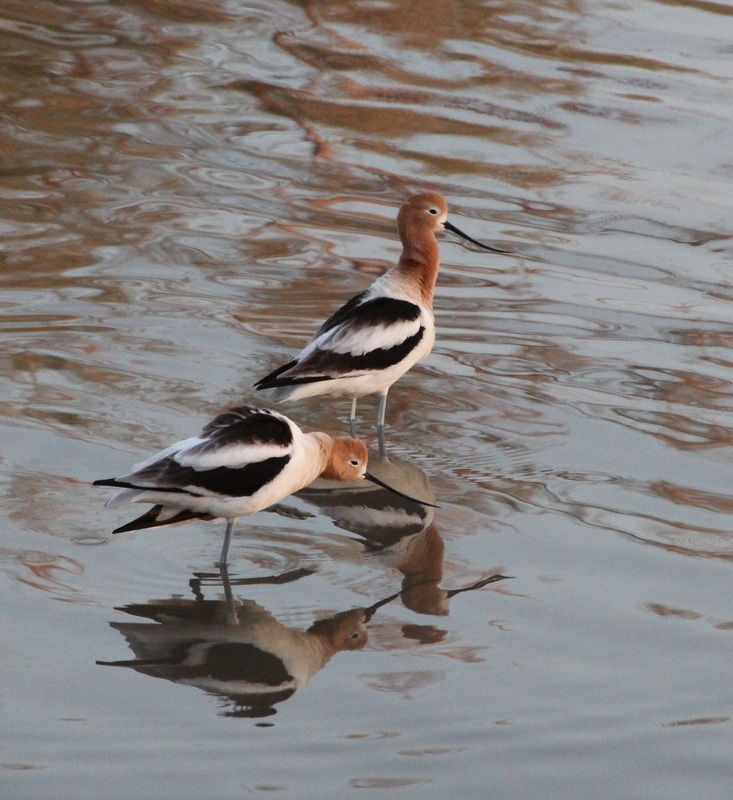
American Avocets are in lotsa places too.
And it’s a nice evening. As the sun sets, I start back toward… uh, civilization… and what do I happen upon? Why, it’s a pair of Lesser Nighthawks, dancing in the sky.
Oh. Snap. That’s a lifer, and that makes seven ABA-area lifers in one day. I feel as though floating in a sea of grace.
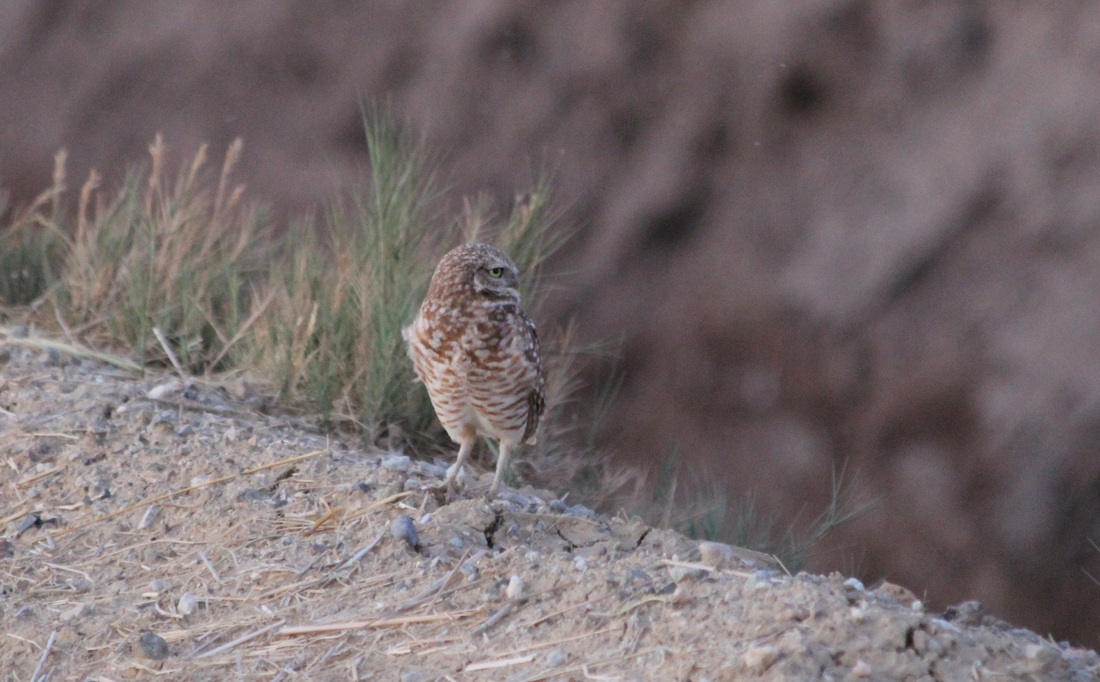
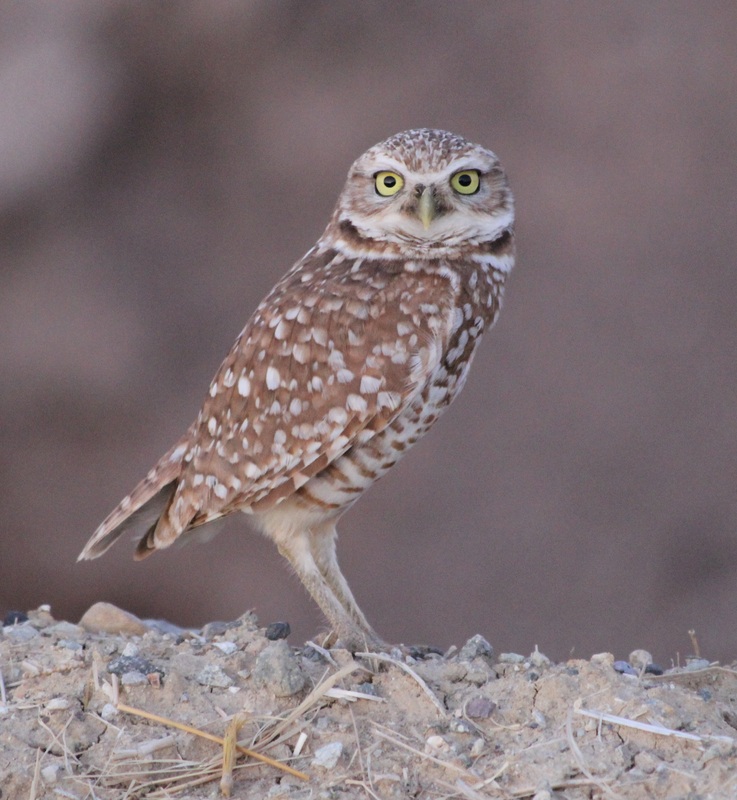
And just when I think the day’s done, I see this guy on the side of the road:
Burrowing Owl Not a lifer, but an awesome, awesome bird.
This just slays me. One of my favorite shots ever. 7:45 pm. Brawley, CA Best Western. Oblivion.
SUNDAY
Let me assure my weary readers that there’s much less to say about Sunday. All that's left is to try my luck on two more species, scope out the fabled Anza-Borrego Desert a bit, and make my way home. Having had so many birdies on the way out, it hardly matters how I do on the back nine. (Yeah I just said that.)
I hit the road at 5:45.
6:50 am. Old Springs Road Open Space Preserve. Target: Le Conte’s Thrasher.
Yeah, right. I don’t even get out of the car here. It’s sort of gloomy and windy and there’s no sign of birds at all.
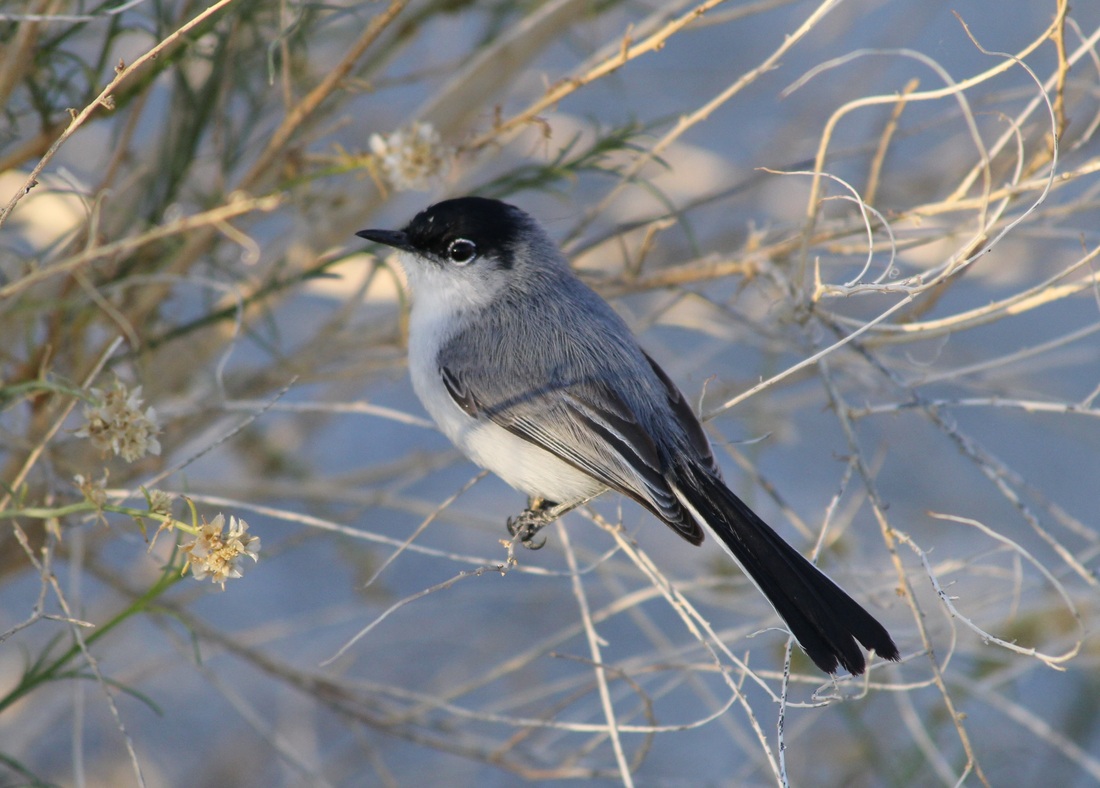
7:00 am. Anza-Borrego Desert State Park Visitor’s Center. Target: Black-tailed Gnatcatcher.
This is a really nice little spot. Cactus Wrens are singing, California Quail are strutting around, and sure enough, pretty soon I spot the first of several dashing little Black-tailed Gnatcatchers. This guy’s pretty cooperative.
Handsome devil. After watching him and the other desert specialties for a bit, I pause to talk to two other birders who are milling around – a young guy from Indiana who’s seeing everything here for the first time, and an older guy from Washington state who spends his winters down here and knows the area. I ask him if he has a good spot for Le Conte’s Thrasher; he tells me Clark’s Dry Lake is as good a spot as any.
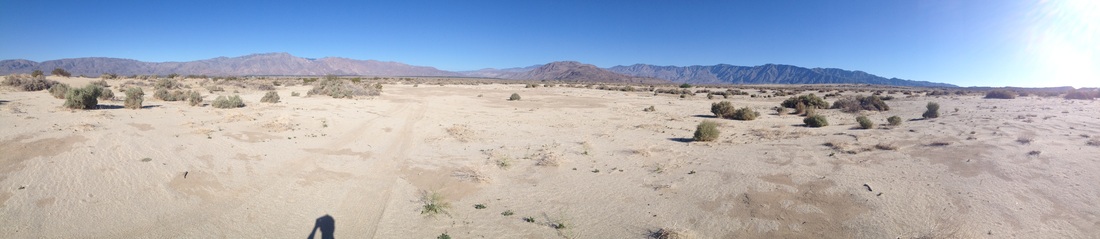
8:00 am. Clark’s Dry Lake.
From the middle of nowhere, you take a dirt road five miles to get to this place. This pic isn’t from the lake bed but it’s what pretty much the whole huge area feels like. (Click on the pic for a larger version.)
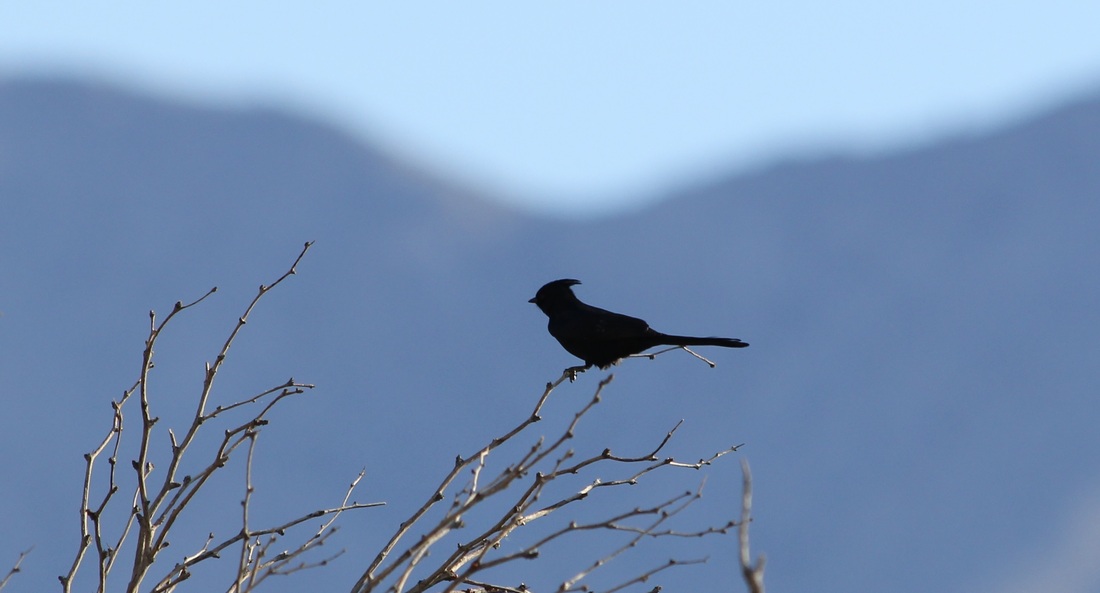
Unfortunately it’s really windy here, but it’s kinda funny to watch the Phainopeplas (which are plentiful) get buffeted by the wind.
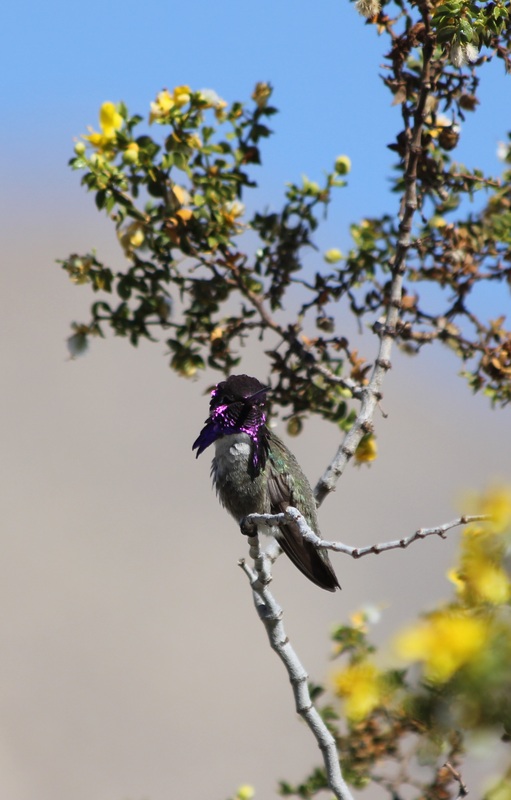
Otherwise, not many birds. At one point I hear something like a thrasher’s song from deep down in the bushes, but there’s just no chance of getting a look at whatever’s in there. Anyway who could complain? I start the great journey north and west, making one more stop at the visitor’s center, now overrun by humans but still good for a nice look at a male Costa’s Hummingbird:
I leave at 10:05.
The long journey home has its nice birds, but the tenor of the trip has changed. I’m now moving not away from the swarms of humanity but toward them, and it being a fine spring Sunday, they are understandably out enjoying the parks and clogging the roads. At 11:30 I stop at Lake Skinner County Park in Riverside County, where I see a few things that are new for the trip, the nicest being my first Yellow Warbler of the year – a brilliant male singing from the trees along the lakeshore. And there are lots of barbecues and kids’ birthday parties and so forth all around. It’s sort of nice, in a coming-back-down-to-earth kind of way.
Traffic crawls through the insipid concrete landscape – this is the other side of the SoCal coin. I stop for some sugar and caffeine to lift my spirits; it works. As I finally near L.A., I decide to prolong the trip just a bit more, making a stop at my regular neighborhood birding spot. It, too, is overflowing with people, like I’ve never seen it before. But there are still a few birds about. I pick up one more species for the trip list, the squawking family of Acorn Woodpeckers that I never fail to see here. And I leave the park to the revelers.
3:50 pm. Home.
There you have it:
34 hours,
616 miles,
113 species.
Eight glorious lifers.
Plus, you know, lots of photos and memories and all that stuff. Are there better things to do with your time? Probably. But once in a while, you just gotta cut loose.
I submit that this is a damn fine way to do it.
So I had myself a birding bender this weekend, just like I told y’all I was gonna. I’ve had trouble getting psyched up to write the recap, though. Maybe cause I don’t think I can explain how much fun it was… or just because the writing is a lot less fun than the bender-ing. Regardless, it’s high time you heard about this, so I’m just gonna bang it out here. Part of it, anyway. With the goal of racking up some lifers, I devised an ingenious route through Southern Southern California, aka SoSoCal, meaning everything south of L.A. Not sure if that’s an official term, but if not – BOOM! I just trademarked it. I had nine target species in mind. Here’s how it went down. SATURDAY I hit the road at 5:55 am. The sky is pitch black and freeway traffic is tolerable. My target birds slumber, unawares. 6:55 am. Dana Point Nature Interpretive Center. Target: California Gnatcatcher. This is a pretty spot, a hill blanketed with coastal sage scrub overlooking the ocean. As soon as I’m out of the car I see action in the adjacent yard – House Wren, Orange-crowned Warbler… and within five minutes, a quick glimpse of a male California Gnatcatcher. WTF, so easy! Although… not the most satisfying look. And it would feel wrong to just grab what I came for and bounce after five minutes. So I stay to check the place out a little. Before I even get to the trail I run into this guy just chillin:
Greater Roadrunner
Walking the trail, I hear more gnatcatchers, and see a couple, but they’re moving quickly through dense shrubs, so no pics. Good enough looks though. While I’m at it I snag a few shots of more familiar birds in the gray, early-morning ocean mist.
California Towhee
Anna's Hummingbird
Good stuff. At 7:45, I’m back on the road.
8:30 am. San Dieguito Lagoon. Target: Pacific Golden-Plover.
There were reports a couple weeks ago of a Pacific Golden-Plover here, and I’m hoping it might still be around. For starters I get confused and wind up at the wrong spot, but there’s decent birding there, including a swarm of handsome Cliff Swallows and a stately Long-billed Curlew. After a couple more wrong turns and a bit more exposure to the uppity town of Del Mar than I care for, I get to the mouth of the lagoon. No sign of the plover; no sign of any shorebirds. Yeah… probably too late in the season for those guys to be hanging around. Oh well. My consolation prize is a nice pair of Redheads (though the light sucks):
One hit, one miss. Back on the road at 9:25.
9:50 am. La Jolla Cove. Target: Wandering Tattler.
Though also a winter bird like the plover, these guys have been reported more recently, and in numbers greater than one, so I like my odds better. This place is crazy for two reasons: 1. It attracts tons of people, and 2. It attracts tons of seals. From like a mile away you can hear the seals barking and moaning and basically being giant disgusting slobs. Maybe the cove is the seal version of Greek Row, who knows. Anyway I walk down the hill toward what I figure is the tattler spot, pausing to crush a few birds on the way:
Yeah it's just a House Sparrow, but look how close!
Brown Pelican, Brandt's Cormorants
Western Gull
I get down to where I can see the inner cove well, and sure enough, those suckers are down there. BOOM!
Yes, there is a bird here.
Let's try that again:
Well, this'll have to do. Wandering Tattler.
They stay out of view a lot of the time, tucked in among the rocks, but I get good enough looks. By now the day is warm and sunny, and I stroll back to my car, soaking it all in. A damn fine day, I think. Though I can barely hear my thoughts above the din of the seals and tourists. Damn seals and tourists.
Back on the road at 10:40.
11:20 am. Tijuana River National Estuarine Reserve. Target: Clapper Rail.
Chances are, I’ve walked or driven by these birds many times as they hid in the reeds. I may have even seen one as a greenhorn back in Florida and misidentified it as a King Rail, who knows. It’s not rare, and it needs to be on my life list already. Fortunately, this place is THE SPOT to see these suckers. On the San Diego Audubon Society website, the first thing they say about the place is, “A high tide should bring out Clapper Rails here, right along the street.” Um… WHAT? Sounds like you have to drive slowly just to avoid running over the mob of rails.
Of course I get there, perfectly timed to catch high tide, and… crickets. No rails, and no birds at all in the little channel where the nice lady in the visitor’s center tells me to look. After a while of seeing nothing encouraging, I drive around the corner to another spot that’s supposed to have them sometimes. It’s a stretch of sidewalk overlooking a wide swath of reedy wetlands, introduced by this sign:
Riiiiiiiight.
I scan every little channel I can see, peering into the reeds as best I can – nothing. I’m baking in the midday sun, and I sense the onset of that sinking feeling that comes with whiffing on a bird. I try to content myself looking at the one sizable flock in the whole area, a raft of sleeping Ruddy Ducks in the distance with a couple grebes mixed in. Then I notice one of the ducks seems to be swimming purposefully instead of dozing. And its bill looks too long. Hold up. I get the binos on it just in time to watch it reach the other side of the channel, climb out, and dive into the tall reeds – a Clapper Rail. Oh hell yes.
Evidently the locals have seen my kind before... and know a thing or two about classy signs!
I abided.
Once again I linger a bit hoping for a better look, but I have my bird, so I hit the road at 1:15. I make a quick stop to pick up some badly needed sunblock and a Subway sandwich (subsequently inhaled while driving), and speed off to my next stop.
1:50 pm. Dairy Mart Road Pond. Target: Bell’s Vireo.
Greasy with sunblock, sweat and mustard, and heavy with sandwich, I lumber out onto the pretty, wooded trail next to the pond. After a few minutes watching swallows overhead and hearing a zillion Marsh Wrens singing from the reeds, I hear what sounds kinda like a Bell’s Vireo song. (I’ve been studying, natch.) Approaching the source, I get more and more sure, and then BAM – he’s right in front of me. Amazing! My photos don’t come out well, but I do get a short video. At least you can hear what he sounds like:
I never get more than fifty yards from the car here. A quick scan of the other birds, and I hit the road again around 2:35. I’m leaving the coast now, leaving civilization, heading into the belly of the unforgiving Southeastern California desert. I am a mind-blowing, heart-exploding four-for-five on my targets so far.
And I have a lot more birds to see.
To be continued!
The weekend is here, the wife's away, and spring is in the air, which means there’s only one thing to do: Go on a birding bender. Yep, I’m cutting loose. No responsibilities. No rules. Just right. I’m sorta tired of hitting the same spots in L.A. over and over, and there’s a decent number of lifers I could find a little farther afield. So I’m heading south, into Orange County, San Diego County, and the great wild nothingness to the east, to see how many of these suckers I can track down in a furious thirty-six hour binge. Wish me luck! And join me, if you would, in meditating on my list of target species. Visualize each one: My binocular view settles on the bird. The lighting is ideal. My hands are steady, my breathing calm. I absorb the relevant field marks unconsciously; I know this is my bird. I bask in its majesty for a moment. I lower my binoculars slowly. I do this. And I head on down the road. Targets: California Gnatcatcher Pacific Golden-Plover Wandering Tattler Clapper Rail Bell’s Vireo Tricolored Blackbird Harris’s Hawk Le Conte’s Thrasher Black-tailed Gnatcatcher ... plus a few more remote possibilities I'll have my eyes peeled for
Last night I had the perfect post all set to go – seriously, all I had left to do was click “publish” – when I discovered that my entire diatribe was based on a misunderstanding. I straight-up just had the basic facts wrong, and as a result, the entire, carefully crafted and – trust me – stunningly elegant post had to be scrapped. Balls. So, like any self-respecting blogger whose spouse is out of town, I took off my pants, fixed myself a glass of bourbon and a PB&J, and settled in to plot my next move. On the one hand, I lacked the willpower to face the Sisyphean task of starting another post from scratch. But on the other hand, I figured a post related to birds (as opposed to fish) was probably overdue. So here’s what I’ve got. A couple months ago I got me a dope new camera, the Canon EOS 60D, and a 70-300mm zoom lens. Since then, I’ve been screwing around trying to photograph birds without having any idea what I’m doing – with surprisingly satisfying results. But then I had an epiphany: What’s to stop me from also shooting videos without having any idea what I’m doing? As far as I can tell, the answer is: nothing. So lately I’ve mixed a little video into my usual regimen of spray-and-pray photography, some of which I’ll share with you below. Now, the videos are a bit shaky – that’s because this is all hand-held. I don’t use a tripod much, because I like to wander around relatively unfettered. I like that I can throw my binoculars around my neck and my camera over my shoulder, and stay nimble while I enjoy the outdoors. You know, in case I need to scale a steep concrete river bank to get the perfect shot. Or run away from street toughs. So they’re a little shaky. But they’ll give you a very small taste of the abundant bird life in Greater L.A. Enjoy?
Like most birding bloggers, if I could pick one thing to be known for, I'd pick: fish videos. To that end, I doubled-down on my Thursday carp captures by grabbing a couple more clips yesterday. I didn't actually see it happen, but I think this fish stranded itself, jumping out of the water to catch a bug or something (whatever fish jump for) and landing on concrete. Talk about an "oh shit" moment. I noticed it flopping around, catching some impressive air, but lacking direction. I hustled over and caught this quick shot as it was losing steam. I guess this is some kind of trout. (If you know fish, help me out with the deets?) Like most things aquatic in L.A., it's not a natural occurence; these guys are stocked by the California Department of Fish & Game. Anyway, I know the suspense is killing you: No, I did not let the poor bastard die on the dock. With my hot new kicks from New Balance, I pushed it gently back into the water.... where it proceeded to float slowly, upside-down, up to the surface. Uhhhh..... Well, then this happened: Vaya con dios, little trout.
The L.A. River is one of those fascinating things I keep meaning to learn more about but never quite get around to, like Spanish, or ironing. Here it is, running through and named after the second-largest city in the U.S., like it’s some kind of big deal. But the first time you actually see it, part of you dies. It kinda seems like a sick joke to even call it a river, since for most of its length, it’s a narrow, shallow trickle through a concrete bed. Yes, concrete. Wide, sloping banks of graffitied concrete, bleak enough to fit nicely into any near-future urban dystopia you might encounter. But sometimes you learn stuff without trying. Yesterday I was scoping out my favorite birding patch along the river when I saw some splashing in my peripheral. Thinking it might be a duck, I spun around with impressive speed to get my binos on it. But… well, it weren’t no duck. WTF? Some sort of horrid sea creature… possibly a young kraken. Or, OK… on closer inspection, it turned out to be a fish. And there were others. In water that couldn’t be more than two inches deep, these fat fish were fighting their way upstream…. to spawn? So I’m no wildlife biologist, but I’m pretty sure I’ve seen all the relevant episodes of Marty Stouffer’s Wild America (hilarious website BTW), and this type of thing is supposed to happen in Alaska. You take one of those sketchy-ass biplanes with a salty old pilot who doesn’t let on how scared he is about the storm that’s coming, but then he lands you safely and wishes you good luck, and you hike for ten days to get to the perfect spot where Grizzly Bears and Bald Eagles are all over the place, eating just the eyeballs off millions of dying post-coital salmon. That’s just how it works. This trickle through a trash heap, in the shadow of a major, gridlocked freeway, surely could not be the setting for one of nature’s great spectacles. But it was. (Sort of.) Back home, a quick bit of googling confirmed that this was a real thing (cool blog BTW). The fish were non-native carp, and from the sound of it, some of them actually succeed in making it to a lake upstream. God knows it ain’t easy. Out of the dozen or so fish that I watched, a couple of them seemed to just give up and head back downstream on purpose. Well, you gotta know your limits. Other clichés illustrated by these fish include “Where there’s a will, there’s a way,” and “When life hands you lemons, make lemonade.” You see, the degraded river is the lemons, and spawning is the lemonade. My not seeing any blog-worthy birds is also lemons, and blogging about spawning and trash-rivers is lemonade. You, lucky reader, are the customer at my lemonade stand, only I’m giving the lemonade away for free. And if you think taking free lemonade from a random dude in Los Angeles is a good life choice…. well, I’ve got a gorgeous river to show you sometime.
This weekend, during the scan of my Facebook news feed that I do compulsively every five minutes like most of you (why deny it?), one update in particular caught my eye:
Low blows? Crazy people? This sounded awfully exciting for a birding blog. So I clicked through to the story, and what a story it was: “ National Audubon Society Caves to the Cat Crazies.” Mind you, the National Audubon Society (NAS) is one of the oldest, largest, and most revered conservation organizations in the country. Bashing them is like bashing… I don’t know… Johnny Appleseed or something. It’s rather shocking. So what’s got the birders in a tizzy? Well, I am not a journalist, but as far as I can tell it went something like this: 1. Freelance writer Ted Williams wrote a column about the environmental problems caused by feral cats. Rejecting the popular management strategy of “trap-neuter-release” (TNR), Williams proposed instead that cats be trapped and euthanized. 2. The Orlando Sentinel – the same paper from which I learned, as a youngster growing up in Central Florida, of such world-obliterating events as the ’88 defeat of Michael Dukakis and the ’96 defection of Shaquille O’Neal to the Lakers – printed Williams’s piece (since revised). (Looking at the Sentinel’s sad website today, the dreary font squeezed in between huge, flashing ads, you’d think they hadn’t touched it since Shaq left town.) Importantly, the Sentinel listed Williams as “editor-at-large for Audubon magazine.” (That was technically true, though the cat piece had nothing to do with Audubon.) 3. A whole lot of people got pissed, and they let the National Audubon Society know about it. 4. NAS responded by announcing they had suspended Williams’s work for Audubon magazine and would remove him from the masthead “pending further review.” Enter the birding-bloggers. They leapt to Williams’s defense, led by the biggest birding blog of them all, 10,000 Birds. One of the site’s managers (owners? head bloggers?), Corey Finger, called the NAS reaction “sad, stupid, and short-sighted,” and wondered whether a Williams-less Audubon magazine would be worth reading. And yes, he dropped that bomb – “cat crazies” – evoking (for me, anyway) a traitorous mob, hell-bent on subjugating humanity to some sort of feline despot. Angry comments from both sides piled up on the blog, as well as on the many Facebook shares of it. The stakes were high – some truly emphatic posts earned dozens of “likes.” Another top birding blogger and personality, Sharon “Birdchick” Stiteler, chimed in with an emergency podcast on the subject. Overall, her language was somewhat less inflammatory than that of Mr. Finger, but in her own folksy way she, too, came down hard on the NAS. In short, it seems the blogging luminaries are of one mind on this subject: NAS “caved.” They missed a golden opportunity to stand up to the ignorant bullies who advocate for trap-neuter-release. They threw their man Ted under the proverbial bus full of cat crazies. Of course, what you’ll want to know next is, “Where does Birding for Humans stand on all this?” Well, here are some things about me: I am a birder. I own and love a cat. My cat does not go outdoors, but he sometimes kills crickets that wander into my apartment. He usually eats them.
Cuddly friend to man, remorseless butcher to cricket.
I am not a member of the National Audubon Society. I think? I have been one at times. I respect their right to choose the people with whom they want to work, even if their choice is made out of fear of “cat crazies.” But I do think that seems kind of… lame. I think the phrase “cat crazies” is probably best left out of any serious debate, unless accompanied by quotes, air quotes, or at least an apologetic facial expression. I don’t know whether euthanizing feral cats is a good thing overall, but I think it should be judged mainly on its effectiveness at conserving native wildlife – not on how cute cats are or whether they did anything to deserve death. Animals die, including people. I don’t like it any more than Woody Allen does, but that doesn’t change anything. If I have to choose between wild, native birds and feral cats, I choose the birds. If I had to choose between wild, native cats and feral birds, I would choose the cats, even though I can’t go for a walk in the mountains without being 90% sure a mountain lion is going to eat me, or possibly just kill me for fun. I’m not sure which would be worse. And there you have it. The point, if there were a point, would be that the birding blogosphere is a serious place – like, apeshit serious. If President Reagan had been into birds, and born like a thousand years later, he would be blogging right now about the “ evil empire” of cat people. Holy shit – has anybody thought of shooting missiles at the cats yet?
Today I am feeling my oats, thanks to a great personal birding triumph. For months I’ve kept an eye out for these suckers, following up on the occasional reports that trickle in from around Greater L.A., only to meet with disappointment. Yesterday, it finally happened: I saw my first ever Lawrence’s Goldfinches.
And yes, I got some pics. I wasn’t able to crush them like I’d hoped (“crush,” in the usage of at least one birding blogger, meaning something like “to get awesome photos of”) – but they will do. These are goddamn gorgeous birds and I defy you not to be charmed by them.
Male
Female
Male
They were chilling at the Altadena Golf Course, where according to the friendly residents of adjacent Morada Place (who readily chatted me up), they return year after year. This despite being notoriously “erratic” and having “no loyalty to [their] breeding areas” (see here). Well, none of that matters now, because my earthly trials are over, insofar as they relate to this bird. When I arrived, a pair of birders was just leaving, having struck out on the goldfinch. Slightly discouraging, but I didn’t mind the idea of hanging around for a while; the weather was amazingly awesome. The couple drove off, and two minutes later I had the birds. MY birds. I stayed around for about an hour, basking in the SoCal sun and the glory of my long-sought victory. While I was at it, I did my best to crush this dapper male Western Bluebird, using my high-end camera and very low-end skills. Suffice it to say it was a damn fine day. And it feels like a harbinger. Spring is nigh, which means the birds are plentiful and it’s high time to be outdoors. In fact, I have travel plans that could make this my biggest birding year yet. STAY TUNED.
|